Tuareg Cultural Heritage:
Navigating Conflict and Climate Change
Rachid Bouajila
IIHS Regional Contributor
Tunisia
Executive Summary
The Tuareg people, an indigenous nomadic group of the Sahel, possess a rich cultural heritage intrinsically linked to their traditional way of life and environment. This report assesses the severe and interconnected threats posed by escalating regional conflicts and the pervasive impacts of climate change to this invaluable heritage, directly undermining Tuareg human security and sustainable development. Key findings reveal that armed conflicts lead to widespread displacement, fragmenting social cohesion and disrupting traditional practices, while environmental degradation from climate change imperils traditional livelihoods and knowledge systems. Despite these challenges, Tuareg communities are actively engaged in resilient preservation efforts. This report recommends integrated policy approaches that simultaneously address peacebuilding, climate adaptation, and cultural safeguarding, emphasizing community-led initiatives and robust international support for the recognition and protection of Tuareg cultural rights and land tenure.
The Tuareg and Their Enduring Heritage
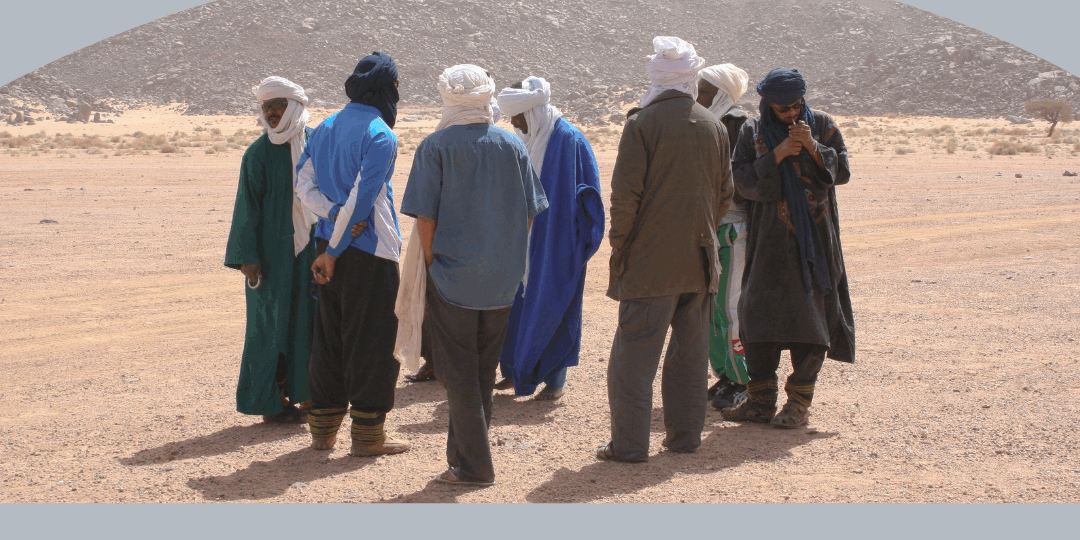
The Tuareg, often referred to as the « Blue People » of the Sahara and Sahel, are an ancient indigenous nomadic people whose rich cultural heritage is profoundly intertwined with the vast desert landscapes they inhabit across parts of Niger, Mali, Burkina Faso, Algeria, Libya, and Mauritania. Renowned for their distinct language, Tamasheq, vibrant music (epitomized by genres like Tishoumaren or « desert blues »), intricate poetry, and exquisite craftsmanship—particularly their unique silverwork and leather goods—the Tuareg embody a profound connection between human identity and the natural environment. Their social structures, traditional knowledge systems related to desert survival, and migratory patterns are not merely customs but are foundational to their collective identity and resilience. This report aims to analyze the severe and escalating threats posed to this invaluable cultural heritage by two interconnected crises: prolonged armed conflicts and the devastating impacts of climate change within the Sahel. By exploring how these external pressures endanger their unique way of life and cultural expressions, we highlight the critical link between cultural heritage preservation and the broader concept of human security, emphasizing its vital role in achieving several of the United Nations Sustainable Development Goals (SDGs), notably SDG 16 (Peace, Justice, and Strong Institutions), SDG 13 (Climate Action), and implicitly SDG 4 (Quality Education) through the preservation of traditional knowledge.
Conflict as a Catalyst for Cultural Erosion
The Sahel region has been plagued by escalating armed conflicts, insurgencies, and political instability, particularly in countries like Mali, Niger, and Burkina Faso. For the Tuareg people, these conflicts have proven to be a devastating catalyst for cultural erosion, directly impacting their human security and threatening the very fabric of their identity.
Displacement and Dispersal: Fragmenting a Nomadic Way of Life
One of the most immediate and profound impacts of conflict is the mass displacement and dispersal of Tuareg communities. Faced with violence, insecurity, and the collapse of state services, thousands of Tuareg have been forced to abandon their ancestral lands and traditional migratory routes, seeking refuge in safer areas or neighboring countries (Global Centre for the Responsibility to Protect, 2025). This forced migration severs their deep connection to specific landscapes, which are often rich with historical and spiritual significance. The loss of access to traditional pastures, water sources, and sacred sites not only disrupts their pastoral livelihoods but also fragments the social cohesion vital for transmitting cultural knowledge across generations. Communities are torn apart, making it challenging to maintain the intricate social networks that underpin their cultural practices and identity (HIR, 2023).
Direct Threats to Cultural Expression and Tangible Heritage
Beyond displacement, conflict zones often become sites of direct cultural destruction and suppression. In areas controlled by extremist groups, Tuareg cultural expressions, particularly music, have been specifically targeted and forbidden under strict interpretations of religious law. In Mali, for instance, the 2012 conflict saw the banning of music and the destruction of musical instruments, directly attacking a core element of Tuareg identity and communication (Potter, 2019). This suppression stifles artistic expression, which for the Tuareg, serves as a powerful means of historical narration, social commentary, and emotional expression (Izu, 2024).
Furthermore, tangible cultural heritage is at severe risk. Historic sites, traditional settlements, and cultural artifacts are vulnerable to deliberate destruction, neglect, or looting. The destruction of mausoleums in Timbuktu, Mali, by extremist groups, though not exclusively Tuareg, serves as a stark example of how cultural sites become collateral damage or deliberate targets in conflicts, erasing shared heritage and communal memory (GPF, 2023). The illicit trafficking of cultural property has also surged in the Sahel, providing funding for armed groups and leading to the irreversible loss of invaluable artifacts from their original cultural contexts (ISS Africa, 2020). UNODC reports highlight the alarming nexus between terrorism and the illicit trade of cultural property in the region, further exacerbating this threat (UNODC, 2024).
These direct and indirect impacts of conflict not only erase tangible and intangible heritage but also inflict deep psychological and social wounds, undermining the human security of the Tuareg by eroding their sense of belonging, continuity, and cultural self-determination.
Climate Change: A Slow but Devastating Threat
While conflict presents immediate and acute dangers to Tuareg cultural heritage, climate change poses a slow-onset but equally devastating threat, systematically eroding the environmental foundations upon which their traditional livelihoods and cultural practices depend. The Sahel region is warming at a rate 1.5 times higher than the global average, leading to more frequent and intense extreme weather events (Sahel Alliance, 2024).
Environmental Degradation and the Loss of Traditional Livelihoods
The most critical impact of climate change on the Tuareg is the acceleration of desertification, coupled with recurrent droughts and erratic rainfall patterns. Nomadic pastoralism, a cornerstone of Tuareg identity, economy, and culture, relies heavily on predictable seasons and the availability of vast grazing lands and water sources for their livestock (camels, goats, cattle). Prolonged droughts, such as those experienced since the 1970s, lead to massive loss of livestock, forcing communities to sell off their productive assets and significantly altering their traditional migratory routes (Cronyn, 2012).
This environmental degradation directly impacts the Tuareg’s ability to sustain themselves through their historical practices. The shrinking of fertile lands and water scarcity intensify competition for dwindling resources, often exacerbating existing inter-communal tensions and potentially fueling further conflict (Tarif, 2022). The shift from a nomadic, transhumant lifestyle to more sedentary existence due to environmental pressures can fundamentally alter social structures, cultural expressions tied to movement and the open range, and traditional economic systems.
Erosion of Traditional Ecological Knowledge Systems
For millennia, the Tuareg have developed sophisticated Traditional Ecological Knowledge (TEK), a body of evolving knowledge and practices handed down through generations, crucial for adapting to the harsh Sahelian environment. This includes deep understanding of weather patterns, animal husbandry, water management techniques, and the medicinal properties of desert plants (UNHCR, 2020). However, the unprecedented pace and severity of climate change are rendering some of this traditional knowledge less effective or even obsolete.
When traditional grazing areas become barren or water sources disappear permanently, the centuries-old wisdom about these specific environments loses its practical application (Brooks, 2006). The disruption of migratory cycles also hampers the intergenerational transmission of TEK, as younger generations may not experience the traditional routes or learn the nuanced environmental indicators from elders in the same way. This erosion of TEK not only represents a loss of valuable human knowledge but also threatens the Tuareg’s adaptive capacity and resilience in the face of future environmental shifts, thereby undermining a critical aspect of their human security (Reyes-García et al., 2023).
The combined pressures of environmental degradation and the diminishing relevance of traditional knowledge systems force many Tuareg to abandon their ancestral practices, leading to a profound cultural loss that impacts their identity, well-being, and overall human security.
Resilience, Preservation Efforts, and Global Perspectives
Despite the severe challenges posed by conflict and climate change, the Tuareg people demonstrate remarkable resilience and are actively engaged in diverse preservation efforts to safeguard their invaluable cultural heritage. These community-led initiatives, often supported by international frameworks, are crucial for maintaining identity and fostering human security in a rapidly changing environment.
Community-Led Preservation Initiatives: Sustaining Identity
Tuareg communities, both within the Sahel and in diaspora, are at the forefront of preserving their cultural legacy. Efforts include the establishment of community schools to teach Tamasheq language and traditional knowledge to younger generations, ensuring the continuity of oral traditions and literary heritage (Jalali, 2013). Cultural festivals, even in challenging contexts, continue to be organized to celebrate traditional music, poetry, and craftsmanship, acting as vital platforms for cultural transmission and communal cohesion. The distinctive Tuareg music, epitomized by bands like Tinariwen, not only provides a powerful means of expression but also serves as a vehicle for cultural diplomacy, sharing their narrative with a global audience and fostering appreciation for their unique artistic traditions.
Furthermore, initiatives focused on traditional craftsmanship, such as silverwork, leather tanning, and textile weaving, are being pursued to maintain these skills and provide economic opportunities. Projects like UNHCR’s MADE51 Sahel Collection empower Tuareg refugees by connecting their artisanal skills with global markets, thereby enabling them to rebuild livelihoods while simultaneously preserving and promoting their cultural heritage. These initiatives highlight how cultural preservation can directly contribute to economic well-being and a sense of dignity.
Global Perspectives: UNESCO’s Role and Challenges
The international community, particularly through the United Nations Educational, Scientific and Cultural Organization (UNESCO), plays a crucial role in safeguarding cultural heritage. UNESCO’s Intangible Cultural Heritage of Humanity list recognizes significant cultural expressions, and several elements related to Tuareg culture have been inscribed. A notable example is the « Practices and knowledge linked to the Imzad of the Tuareg communities of Algeria, Mali and Niger », inscribed in 2013 (UNESCO, 2013). The Imzad, a single-stringed bowed instrument played by women, embodies Tuareg music, poetry, and social interaction, with its inscription aiding in its visibility and conservation. Similarly, the Sebiba festival of the Tuareg in Djanet, Algeria, a ceremonial dance and drumming event, was also recognized, underscoring the importance of intangible heritage for identity.
However, the application of international heritage frameworks in conflict-ridden and climate-stressed regions like the Sahel faces significant challenges. While UNESCO’s conventions provide normative guidelines for cultural protection in armed conflict (such as the 1954 Hague Convention), their implementation can be hindered by the presence of non-state armed groups, lack of state control, and the overwhelming humanitarian crises (Welsh, 2022). The need for better coordination between humanitarian aid, development, and cultural protection agencies is paramount, along with training for peacekeepers and local security forces on the importance of cultural heritage in conflict zones (EEAS, 2024).
Despite these hurdles, the ongoing efforts by Tuareg communities, supported by international recognition and strategic partnerships, demonstrate the profound human need to preserve cultural heritage as a cornerstone of identity, resilience, and sustainable human security.
Recommendations
Protecting Tuareg cultural heritage in the face of ongoing conflict and escalating climate change requires a multi-faceted and integrated approach that prioritizes human security and indigenous rights. The following recommendations advocate for actions at local, national, and international levels:
- Strengthen Indigenous Land Rights and Autonomy: Formal legal recognition and protection of Tuareg ancestral lands and traditional migratory routes are fundamental. Secure land tenure is critical for maintaining their nomadic pastoralism, accessing sacred sites, and preserving traditional ecological knowledge. Governments in the Sahel should work with Tuareg communities to implement and enforce land rights frameworks that align with the United Nations Declaration on the Rights of Indigenous Peoples (UNDRIP), particularly Article 10 which states that « Indigenous peoples shall not be forcibly removed from their lands or territories ».
- Integrate Cultural Heritage Protection into Humanitarian and Peacebuilding Efforts: Responses to conflict and displacement in the Sahel must explicitly incorporate cultural heritage safeguarding. This includes providing resources for displaced communities to maintain their cultural practices, supporting cultural education in refugee settings, and integrating cultural awareness into the training of peacekeeping forces. Funding mechanisms should prioritize programs that link humanitarian aid with cultural resilience initiatives.
- Foster Climate Adaptation Strategies Rooted in Traditional Ecological Knowledge (TEK): Climate adaptation programs in the Sahel must actively engage Tuareg communities and leverage their profound TEK. This involves co-developing strategies for sustainable resource management, water conservation, and resilient livelihoods that build upon their traditional practices rather than imposing external solutions (Development Aid, 2025). Investing in research and documentation of Tuareg TEK can also contribute to broader climate adaptation efforts across the region.
- Enhance Support for Community-Led Cultural Preservation Initiatives: International donors and national governments should directly fund and empower Tuareg community organizations and cultural associations. Support should target initiatives focused on language revitalization, traditional craft apprenticeships, digital archiving of oral histories, and cultural festivals. Providing resources for cultural entrepreneurship, such as through programs like UNHCR’s MADE51, can also create sustainable livelihoods that reinforce cultural identity.
- Combat Illicit Trafficking of Cultural Property and Cultural Appropriation: Strengthen international and national legal frameworks to prevent the illicit trafficking of Tuareg artifacts and traditional art from conflict zones. Furthermore, promote ethical engagement with Tuareg culture to prevent cultural appropriation, ensuring fair compensation and recognition for their intellectual property and cultural expressions. This requires raising awareness among global consumers and art markets about the origins and ethical implications of cultural goods from conflict-affected regions.
- Promote Intersectional Approaches in Policy and Programming: Recognize that Tuareg vulnerability is multi-layered, stemming from the intersection of their indigenous identity, nomadic lifestyle, and exposure to conflict and climate change impacts. Policies and programs should adopt an intersectional lens to ensure that interventions are tailored to their specific needs and do not inadvertently exacerbate existing inequalities or marginalization.
By implementing these recommendations, national and international actors can move beyond merely reacting to crises and instead contribute to the long-term human security and cultural vitality of the Tuareg people in the Sahel.
Sources
Brooks, N. (2006). Climate change, drought and pastoralism in the Sahel: Discussion note for the World Initiative on Sustainable Pastoralism. IUCN. https://www.iucn.org/sites/default/files/import/downloads/e_conference_discussion_note_for_the_world_initiative_on_sustainable_pastoralism_.pdf
Cronyn, N. (2012). Global change and livelihood adaptations among the Tuareg of Niger [Doctoral dissertation, The University of Arizona]. ProQuest Dissertations and Theses Global.
Development Aid. (2025, May 1). Ensuring Indigenous rights to foster climate action. [https://www.developmentaid.org/news-stream/post/194707/ensuring-indigenous-rights-to-foster-climate-action](https://www.developmentaid.org/news-stream/post/194707/ensuring-indigenous-rights-to-foster-climate-action)
European External Action Service. (2024). Safeguarding the past, securing the future: EU’s third report on cultural heritage in conflicts and crises. https://www.eeas.europa.eu/eeas/safeguarding-past-securing-future-eu%E2%80%99s-third-report-cultural-heritage-conflicts-and-crises_en
Global Centre for the Responsibility to Protect. (2025, March 14). Central Sahel (Burkina Faso, Mali and Niger). [https://www.globalr2p.org/countries/mali/](https://www.globalr2p.org/countries/mali/)
Global Policy Forum. (2023, August 5). ICC convicts Al Mahdi for the destruction of cultural heritage in Mali. [https://www.globalpolicy.org/en/article/icc-convicts-al-mahdi-destruction-cultural-heritage-mali](https://www.globalpolicy.org/en/article/icc-convicts-al-mahdi-destruction-cultural-heritage-mali)
Harvard International Review. (2023, January 23). Desert Blues: Tuareg Rock, Tinariwen, and Political Instability in the Sahara. [https://hir.harvard.edu/desert-blues/](https://hir.harvard.edu/desert-blues/)
ISS Africa. (2020, December 9). Inside the illegal trade in West Africa’s cultural heritage. [https://issafrica.org/iss-today/inside-the-illegal-trade-in-west-africas-cultural-heritage](https://issafrica.org/iss-today/inside-the-illegal-trade-in-west-africas-cultural-heritage)
Izu, B. O. (2024). The impact of oral traditions on African indigenous musical practices: A systematic literature review. Journal of Arts and Cultural Studies, 3(2), 1-12. https://doi.org/10.23112/acs24110401
Jalali, M. (2013, May 30). Tuareg migration: A critical component of crisis in the Sahel. Migration Policy Institute. [https://www.migrationpolicy.org/article/tuareg-migration-critical-component-crisis-sahel](https://www.migrationpolicy.org/article/tuareg-migration-critical-component-crisis-sahel)
Potter, S. (2019). Music, identity and national cohesion in Mali: The role of music in the post-colonial era. Contemporary Voices: St Andrews Journal of International Relations, 1(4), 1. https://doi.org/10.15664/jtr.1489
Reyes-García, V., Alvarez-Fernandez, S., Benyei, P., & Garcia del Amo, D. (2023). Local indicators of climate change impacts described by indigenous peoples and local communities: Study protocol. PLOS ONE, 18 (1), e0279847. [https://doi.org/10.1371/journal.pone.0279847](https://doi.org/10.1371/journal.pone.0279847)
Sahel Alliance. (2024, October 29). The Sahel and the challenges of climate change. [https://www.alliance-sahel.org/en/news/sahel-climate-change-challenges/](https://www.alliance-sahel.org/en/news/sahel-climate-change-challenges/)
Tarif, K. (2022). Climate change and violent conflict in West Africa: Assessing the evidence. Stockholm International Peace Research Institute (SIPRI). [https://doi.org/10.55163/VHIY5372](https://doi.org/10.55163/VHIY5372)
UNESCO. (2013). Practices and knowledge linked to the Imzad of the Tuareg communities of Algeria, Mali and Niger. Intangible Cultural Heritage. Retrieved from https://ich.unesco.org/en/RL/practices-and-knowledge-linked-to-the-imzad-of-the-tuareg-communities-of-algeria-mali-and-niger-00891
UNHCR. (2020). Indigenous peoples’ knowledge and climate adaptation. [https://www.unhcr.org/sites/default/files/legacy-pdf/5f3104104.pdf](https://www.unhcr.org/sites/default/files/legacy-pdf/5f3104104.pdf)
United Nations Office on Drugs and Crime. (2024). UNODC supports West Africa in countering the nexus between terrorism and organized crime, with a focus on illicit trafficking of cultural property. https://www.unodc.org/unodc/en/terrorism/latest-news/2024_unodc_unodc-supports-west-africa-in-countering-the-nexus-between-terrorism-and-organized-crime–with-a-focus-on-illicit-trafficking-of-cultural-property.html
Welsh, J. M. (2022). Engaging nonstate armed groups in the protection of cultural heritage. In J. Cuno & T. G. Weiss (Eds.), Cultural heritage and mass atrocities (pp. 429–451). Getty Publications. https://www.getty.edu/publications/cultural-heritage-mass-atrocities/downloads/pages/CunoW
About the author:
Rachid Bouajila is a researcher specializing in sustainable development, with a focus on the legal and ecological landscape in North Africa. He is a dedicated volunteer regional coordinator for the IIHS.